Manual hydraulic presses utilize a hydraulic cylinder for compressive force, offering a versatile tool for various applications. They represent a significant advancement in material manipulation.
What is a Manual Hydraulic Press?
A manual hydraulic press is a machine employing a hydraulic cylinder to generate substantial compressive force, operated by human power rather than an electric motor. This force is achieved through pressurized hydraulic fluid, typically oil, acting upon a piston within the cylinder.
Unlike automated systems, manual presses rely on a hand-operated pump to build pressure. They are valued for their ability to deliver high force with precise control, making them suitable for tasks like metal forming, bearing installation, and plastic compression. Their configuration, however, can be more complex.
Historical Development of Hydraulic Presses
The foundational principles of hydraulic presses trace back to Blaise Pascal’s work in the 17th century, establishing Pascal’s Law. However, practical application evolved much later. Early industrial versions, appearing in the 19th century, were largely powered by steam.
Manual hydraulic presses emerged as a more accessible and controlled alternative, particularly for smaller-scale operations. Their development paralleled advancements in hydraulic fluid technology and manufacturing techniques, offering a robust solution for diverse industrial needs.

Core Components of a Manual Hydraulic Press
Essential components include the hydraulic cylinder, hand-operated pump, fluid reservoir, and a robust frame providing structural support for consistent, reliable operation.
Hydraulic Cylinder and Piston
The hydraulic cylinder is the core force generator, comprising a precision-honed cylinder bore and a tightly fitting piston. Applied pressure to the piston, via hydraulic fluid, creates linear motion and substantial compressive force. Cylinder dimensions directly influence the press’s capacity; larger bores yield greater force. Piston seals are critical, preventing fluid leakage and maintaining consistent pressure. Robust construction ensures durability under high loads, while the piston’s smooth movement guarantees accurate and controlled pressing operations. Material selection is vital for withstanding pressure and preventing corrosion.
Pump Mechanism (Hand Operated)
The hand-operated pump is central to manual hydraulic presses, converting mechanical energy into hydraulic pressure. Typically, a lever-actuated piston draws fluid from the reservoir during the upstroke and forces it into the cylinder on the downstroke. Check valves ensure unidirectional flow, building pressure with each cycle. Pump design influences efficiency and required operator effort. A larger pump displacement generates pressure faster, but demands more force. Regular maintenance, including valve inspection, is crucial for optimal performance and consistent pressure delivery.
Reservoir and Hydraulic Fluid
The hydraulic fluid reservoir stores the working medium, typically oil, essential for pressure transmission. It must be adequately sized to accommodate fluid volume changes during cylinder operation and thermal expansion. Fluid selection is critical; it needs appropriate viscosity, lubricity, and resistance to corrosion. Maintaining fluid cleanliness is paramount, as contaminants can damage components. Regular fluid checks and filtration are vital to prevent leaks and ensure consistent performance of the manual hydraulic press system.
Frame and Structural Support
The frame of a manual hydraulic press provides the rigid structural foundation necessary to withstand immense forces generated during operation. Robust construction, often utilizing steel, is crucial to prevent deformation or failure. Proper alignment of components is essential for consistent performance and longevity. The frame design must accommodate the cylinder, pump, and work area, ensuring stability and operator safety during pressing applications. A well-engineered frame minimizes vibration and maximizes force transfer.
Working Principle of a Manual Hydraulic Press
Manual hydraulic presses function based on Pascal’s Law, multiplying force through a confined hydraulic fluid, enabling powerful compression with manual pumping action.
Pascal’s Law and Force Multiplication
Pascal’s Law is fundamental to the operation of a manual hydraulic press, stating that pressure applied to a confined fluid is transmitted equally in all directions. This principle allows for significant force multiplication. A smaller force applied to a smaller piston generates a larger force on a larger piston, directly proportional to the area difference.
Essentially, the input force is amplified, enabling the press to handle substantial loads. This efficient transfer of energy makes hydraulic presses incredibly powerful for tasks like metal forming and component installation, despite relying on manual operation.
The Pumping Action and Pressure Build-up
The pumping action in a manual hydraulic press, typically hand-operated, draws hydraulic fluid from the reservoir into the cylinder. Each stroke of the pump increases the fluid volume under pressure, progressively building up pressure within the system.
This continuous pumping action translates directly into a rising force exerted by the piston; The operator controls the rate of pressure build-up, allowing for precise control over the applied force during the pressing operation, crucial for delicate tasks.
Release Valve and Pressure Control
The release valve is a critical component, enabling controlled lowering of pressure and retraction of the piston after the pressing cycle. Precise pressure control is achieved through adjustments to the pump or valve settings, allowing operators to tailor the force to specific material requirements.
This control prevents damage to workpieces and ensures consistent results. The valve’s responsiveness is key to safe and efficient operation, allowing for quick release when needed.
Applications of Manual Hydraulic Presses
Manual hydraulic presses are widely used in metalworking, bearing maintenance, plastic molding, and automotive repairs, showcasing their versatility across industries.
Metalworking and Forming
Manual hydraulic presses excel in metalworking due to their ability to apply substantial, controlled force. This makes them ideal for bending, shaping, and forming various metal types. Processes like deep drawing, where metal sheets are formed into specific shapes, benefit greatly from the press’s consistent pressure.
Furthermore, they are utilized in operations requiring precise material manipulation, overcoming hindrances within molds, and addressing issues with pressed parts. The controlled force minimizes material distortion and ensures accurate forming, crucial for producing high-quality metal components.
Bearing Installation and Removal
Manual hydraulic presses are exceptionally well-suited for bearing installation and removal tasks, offering a controlled alternative to hammering or forcing. The press’s even pressure distribution prevents damage to the bearing surfaces or surrounding components, ensuring a precise fit.
This is particularly important for interference fits, where bearings are intentionally sized slightly larger than their housing. The hydraulic press delivers the necessary force without risking component deformation, contributing to longer-lasting and more reliable assemblies.
Plastic Molding and Compressing
Manual hydraulic presses excel in plastic molding and compressing applications, providing the consistent and substantial force needed for shaping various polymers. They are ideal for creating composite parts, laminating materials, and forming intricate plastic designs with precision.
The controlled pressure ensures uniform compaction, minimizing voids and maximizing material density. This capability is crucial for producing high-quality plastic components with desired mechanical properties and dimensional accuracy, suitable for diverse industrial uses.
Automotive Repair and Maintenance
Manual hydraulic presses are invaluable in automotive repair, particularly for tasks requiring significant force. They facilitate bearing installation and removal from various components, alongside pressing joints and suspension parts.
Their controlled force application prevents damage to delicate automotive parts, ensuring precise and reliable repairs. Technicians utilize these presses for straightening bent metal, assembling components, and performing other maintenance procedures efficiently and safely, extending vehicle lifespan.
Advantages of Manual Hydraulic Presses
Manual hydraulic presses offer high force capability, precise pressure control, and reduced component wear, making them versatile tools despite a slower operational speed.
High Force Capability
Manual hydraulic presses are renowned for their exceptional ability to generate substantial compressive force. This stems from Pascal’s Law, enabling force multiplication through a confined hydraulic fluid system. Unlike mechanical presses, they deliver consistent force throughout the stroke.
This high force makes them ideal for demanding applications like metal forming, bearing installation, and deep drawing, where significant pressure is required to deform or compress materials effectively. The capacity to handle heavy-duty tasks distinguishes them.
Precise Pressure Control
Manual hydraulic presses excel in providing remarkably precise pressure control, a crucial feature for many applications. Operators can carefully regulate the applied force, preventing material damage or ensuring consistent results. This control is achieved through the pump mechanism and release valve adjustments.
Compared to other press types, hydraulic presses offer finer adjustments, vital for tasks requiring delicate material manipulation or specific deformation levels. This precision minimizes waste and enhances product quality.
Reduced Component Wear
Manual hydraulic presses demonstrate a lower rate of mechanical wear despite operating under substantial pressure. This durability stems from the hydraulic system’s reliance on fluid transfer rather than direct mechanical linkages. Consequently, fewer parts experience friction and stress during operation.
This characteristic translates to extended service life and reduced maintenance frequency, contributing to long-term cost savings and operational efficiency. The fluid medium cushions forces, protecting critical components.
Versatility in Applications
Manual hydraulic presses exhibit remarkable versatility, adapting to diverse industrial needs. They excel in metalworking, forming, bearing installation/removal, plastic molding, and automotive repair. Their adjustable pressure allows precise control for delicate tasks or robust material manipulation.
Compared to other press types, hydraulic presses offer extensive material handling capabilities and precise adjustments, making them suitable for complex operations and varied production runs.

Disadvantages of Manual Hydraulic Presses
Manual hydraulic presses face drawbacks including slower operation, complex configurations, higher initial costs, and potential maintenance issues like fluid leaks, requiring diligent upkeep.
Slower Operation Speed
Manual hydraulic presses, compared to mechanical or servo presses, inherently exhibit a slower operational pace. The hand-operated pumping mechanism necessitates multiple strokes to achieve full pressure, extending cycle times. This is because force generation relies on manual effort and fluid displacement, unlike the continuous power of electric or mechanical systems.
While providing precise control, this slower speed limits throughput in high-volume production scenarios. Applications demanding rapid, repetitive pressing actions may find manual presses less efficient than automated alternatives. However, for tasks prioritizing accuracy over speed, this characteristic is often acceptable.
Complexity of Configuration
Manual hydraulic presses often present a more intricate setup compared to simpler mechanical presses. Larger models frequently require an independent pump station, increasing the number of components and connections. This translates to a more complex control system and hydraulic circuit, demanding skilled assembly and troubleshooting.
The integration of these parts contributes to a higher initial cost and potentially more involved maintenance procedures. Understanding the interplay between the pump, reservoir, cylinder, and valves is crucial for effective operation and repair.
Higher Initial Cost
Manual hydraulic presses generally command a higher upfront investment when contrasted with mechanical alternatives. This increased expense stems from the sophisticated components required for hydraulic operation, including the pump, cylinder, reservoir, and associated control valves.
The necessity for an independent pump station in larger presses further elevates the overall cost. While offering superior force capabilities, this initial financial commitment should be carefully considered during the purchasing decision.
Maintenance Requirements (Fluid Leaks)
Manual hydraulic presses, while robust, necessitate regular maintenance to ensure optimal performance and longevity. A common issue is the potential for hydraulic fluid leaks from seals, hoses, or connections. These leaks not only reduce efficiency but also pose safety and environmental concerns.
Consistent inspection and timely replacement of worn components are crucial to prevent significant downtime and maintain the press’s operational integrity.

Safety Considerations When Using a Manual Hydraulic Press
Proper training and PPE are vital when operating a manual hydraulic press, alongside regular inspections to mitigate risks and ensure a safe working environment.
Proper Training and Operation Procedures
Comprehensive training is paramount before operating a manual hydraulic press; users must understand its capabilities and limitations. Detailed operational procedures should cover pre-operation checks, correct workpiece positioning, and safe pressing techniques.
Emphasis should be placed on recognizing potential hazards, like pinch points and fluid leaks. Operators need to be proficient in emergency stop procedures and understand the importance of following established safety protocols to prevent accidents and ensure a secure working environment.
Personal Protective Equipment (PPE)
Essential PPE when operating a manual hydraulic press includes safety glasses with side shields to protect against flying debris. Heavy-duty gloves are crucial for handling materials and preventing hand injuries during the pressing process.
Steel-toe boots offer foot protection from dropped objects, while close-fitting clothing minimizes the risk of entanglement with moving parts. Depending on the application, hearing protection may also be necessary to mitigate noise exposure, ensuring operator safety at all times.
Regular Inspection and Maintenance
Consistent inspection of a manual hydraulic press is vital for safe operation. Check hydraulic fluid levels frequently, addressing any leaks promptly to prevent pressure loss and potential hazards. Examine hoses and fittings for cracks or damage, replacing them as needed.
Inspect the frame for structural integrity, and ensure all controls function smoothly; Regular maintenance extends the press’s lifespan and maintains optimal performance, minimizing downtime and ensuring operator safety.
Comparison with Other Press Types
Hydraulic presses excel in material manipulation and precise pressure, contrasting with the speed of mechanical and servo presses for specific tasks.
Hydraulic vs. Mechanical Presses
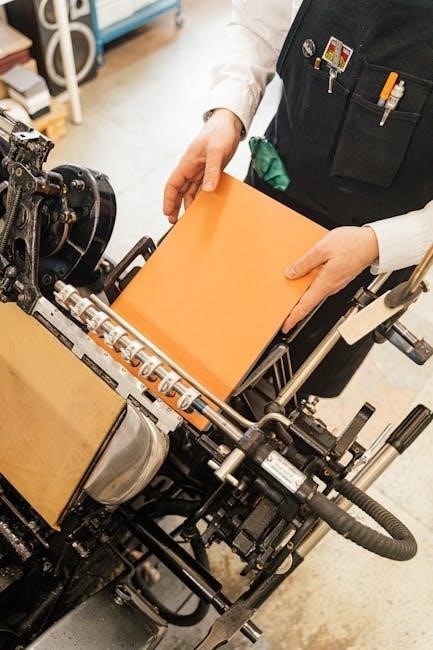
Mechanical presses rely on a flywheel and gears for force, offering high speed but limited control over pressure throughout the stroke. Hydraulic presses, conversely, provide consistent force and precise control via hydraulic fluid, ideal for deep drawing and forming.
While mechanical presses are faster for repetitive tasks, hydraulic presses handle complex shapes and varying material thicknesses more effectively. Mechanical systems experience higher wear due to metal-on-metal contact, whereas hydraulic presses minimize this with fluid power. Ultimately, the choice depends on production volume and application needs.
Hydraulic vs. Servo Presses
Servo presses utilize servo motors for precise control and speed, excelling in applications demanding accuracy and repeatability. Hydraulic presses, while offering substantial force, typically operate at slower speeds. However, hydraulic systems excel in applications requiring extensive material manipulation and precise pressure adjustments.
Servo presses are energy-efficient and programmable, but often come at a higher initial cost. Hydraulic presses provide a robust and cost-effective solution for heavy-duty forming, despite being less energy efficient than their servo counterparts.
Future Trends in Hydraulic Press Technology
Integration with automation and advanced pressure control systems are key developments, alongside more efficient hydraulic fluids, enhancing performance and precision.
Integration with Automation Systems
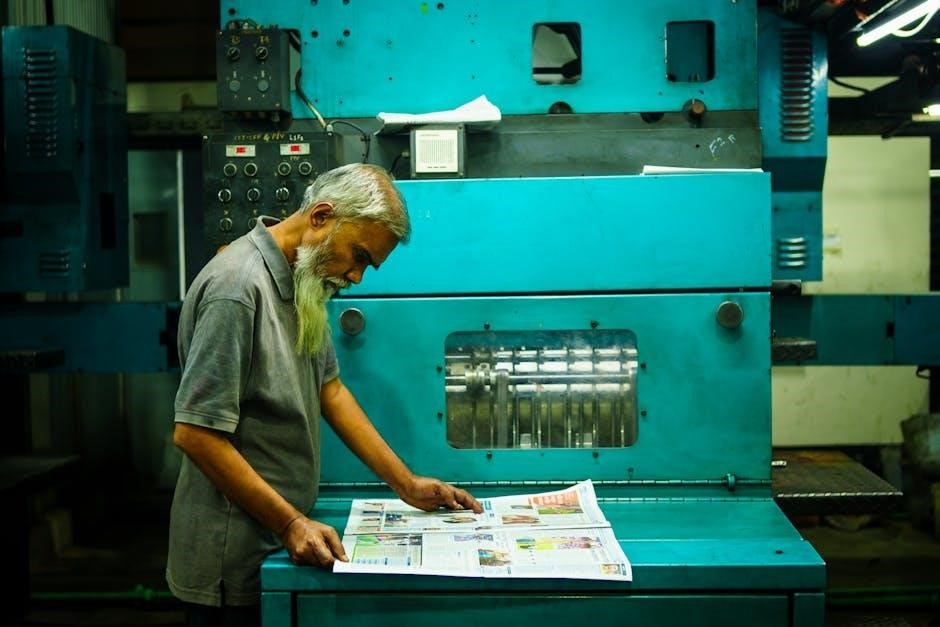
The future of manual hydraulic presses lies in seamless integration with automated systems. This involves incorporating sensors for real-time data collection, allowing for precise control and monitoring of the pressing process. Programmable logic controllers (PLCs) can automate cycles, increasing efficiency and reducing human error.
Furthermore, robotic arms can be utilized for material handling, feeding parts into the press, and removing finished products, creating a fully automated workflow. This integration boosts productivity and consistency, particularly in high-volume manufacturing scenarios, while also improving workplace safety.
Development of More Efficient Hydraulic Fluids
Ongoing research focuses on developing advanced hydraulic fluids for manual presses. These new fluids aim to improve energy efficiency, reduce friction, and enhance overall system performance. Biodegradable and environmentally friendly options are also being explored, minimizing ecological impact.
Formulations with improved viscosity indices offer consistent performance across varying temperatures. Furthermore, fluids with enhanced anti-wear properties extend component lifespan and reduce maintenance needs, contributing to lower operational costs and increased sustainability.
Advanced Pressure Control Systems
Innovations in pressure control are enhancing manual hydraulic press precision. Sophisticated systems utilizing sensors and microprocessors enable finer adjustments and consistent force application. Digital interfaces provide real-time monitoring and feedback, optimizing performance for diverse tasks.
These advancements minimize material waste and improve product quality. Programmable logic controllers (PLCs) allow for automated sequences, increasing efficiency and repeatability in pressing operations, ultimately boosting productivity.
Manual hydraulic presses remain invaluable tools despite technological advancements. Their robust force capability, coupled with precise control, ensures versatility across numerous industries. While slower than alternatives, their reliability and reduced component wear offer long-term benefits. Ongoing developments in automation integration and fluid efficiency promise to further enhance their capabilities, solidifying their position as essential equipment for metalworking, automotive repair, and beyond.

References
Due to the broad application of hydraulic presses, information is dispersed across various sources. Key resources include engineering handbooks detailing Pascal’s Law and hydraulic systems. Manufacturer specifications for specific models (like the FHP series C-type presses) provide detailed operational data. Online platforms like YouTube offer practical demonstrations and troubleshooting guides, alongside academic papers exploring advancements in hydraulic technology and material science related to press working;