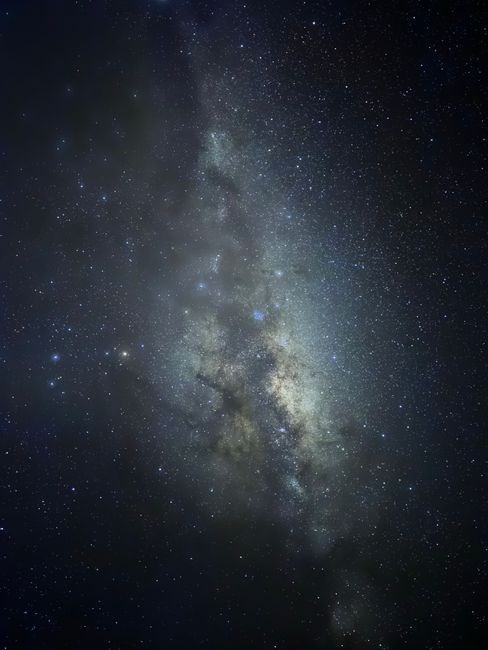
Embark on a journey through the cosmos, guided by Michael Schneider’s Beginner’s Guide. Numbers one to ten unravel hidden patterns in flowers, shells, crystals, and human anatomy, revealing the universal language of mathematics woven into myth, art, and architecture. Explore hidden symmetries of cosmos.!!
Foundations of Modern Cosmology and Mathematical Archetypes
Michael Schneider’s Beginner’s Guide to Constructing the Universe invites readers to re‑examine the very fabric of reality through the lens of modern cosmology and timeless mathematical archetypes. The book opens by situating the observable universe within the framework of contemporary physics—relativity, quantum mechanics, and the expanding cosmos—while simultaneously pointing to the ancient practice of seeking order in numbers. Schneider argues that the first ten natural numbers are not arbitrary labels but foundational symbols that recur in the structure of space‑time, in the distribution of galaxies, and in the rhythm of cosmic background radiation. By treating each number as a prototype, the guide shows how the same archetypal patterns can be mapped onto the geometry of the universe, from the curvature of a single photon’s path to the large‑scale filamentary web that binds galaxy clusters. This dual perspective—scientific and symbolic—provides a scaffold for readers to explore the universe as a living, evolving tapestry of mathematical relationships. The introduction also outlines the methodology the book will employ: a blend of narrative storytelling, illustrative diagrams, and hands‑on exercises that encourage the reader to discover the hidden arithmetic that underlies both the cosmos and everyday life. By grounding the discussion in both the rigor of modern science and the poetic resonance of numbers, Schneider sets the stage for a journey that promises to transform the way we perceive the world around us.—————

The Significance of Numbers One Through Ten
Numbers one to ten serve as cosmic blueprints, appearing in galaxy rhythms, spiral geometry, Fibonacci ratios in star clusters, and quantized energy levels of atoms. These numerals reveal hidden harmony across scales in the fabric of reality and beyond.
Numerical Patterns in Natural Forms and Human Structures
Michael Schneider’s guide shows how the first ten integers appear in the world’s architecture. The single unit of a seed cell, the pair of petals in a simple flower, the trio of ribs in a vertebrate spine, the quartet of quark flavors, and the quintet of fundamental forces all echo the same numeric rhythm. The hexagonal tiling of a honeycomb, the heptagonal symmetry of a certain fern, the octagonal arrangement of a crystal lattice, and the decagonal spiral of a nautilus shell illustrate how 1‑10 govern spatial organization. In human anatomy, the five fingers on each hand, the seven layers of the atmosphere, the nine major brain lobes, and the ten digits of the human hand reflect this pattern. These numbers also appear in cultural artifacts: the 3‑fold repetition in a trinity symbol, the 4‑pointed star in medieval manuscripts, and the 10‑pointed star on a flag. The guide explains that these patterns are not random; they arise from optimal packing, growth algorithms, and evolutionary pressures that favor efficiency and stability. By studying these numeric motifs, readers learn to recognize the underlying mathematical language that shapes both the living and the built environment.
The book also maps the Fibonacci sequence onto the branching patterns of trees, the golden ratio in shell spirals, and the harmonic series in musical scales, illustrating how simple arithmetic underlies complex beauty across disciplines. In every corner of cosmos, reminding us unity.!!!
Geometric Principles in the Universe
Schneider’s guide reveals how triangles, circles, and spirals govern planetary rings, crystal lattices, and human anatomy. The golden ratio links sunflower seed arrangements to galaxy spirals, while symmetry dictates architectural marvels and molecular bonds, showing math’s universal blueprint. —a map us.
Symmetry, Shape, and the Golden Ratio Across Scales
In Schneider’s Beginner’s Guide, symmetry emerges as a universal scaffold, linking the micro‑world of crystal lattices to the macro‑scale of galaxy spirals. The golden ratio, φ≈1.618, appears in the tight packing of sunflower seeds, the elegant curvature of seashells, and the proportions of the human face. This ratio governs the growth patterns of ferns, the branching of trees, and the layout of ancient temples, illustrating how a single mathematical constant can orchestrate form across diverse realms. By tracing φ through these systems, the book demonstrates that symmetry is not merely aesthetic but a functional principle that optimizes space, light, and energy. The consistent recurrence of φ in both natural and cultural artifacts underscores its role as a bridge between the physical laws of the cosmos and the creative impulses of humanity. The guide invites readers to observe these patterns in everyday objects, encouraging a deeper appreciation of the hidden geometry that shapes our world. By observing these recurring ratios in everyday contexts—such as the proportions of a coffee mug, the layout of a city grid, or the arrangement of leaves on a stem—readers can intuitively grasp how the golden ratio informs design, efficiency, and harmony, reinforcing the idea that mathematics is a living language that permeates all aspects of existence. Such insights encourage a approach to creation, reminding us that every design choice echoes the elegant proportions that govern the cosmos!

Fractal and Recursive Structures
Schneider’s guide reveals self‑similarity in snowflakes, coastlines, and branching trees. Recursive rules generate patterns that repeat at every scale, showing how simple equations produce complex, natural forms and inspire algorithmic design in art and architecture;
Self‑Similarity in Plants, Crystals, and Celestial Bodies
In Schneider’s Beginner’s Guide, the concept of self‑similarity is highlighted across nature’s most striking forms. The branching of a fern frond mirrors the overall shape of the whole plant, while the lattice of a quartz crystal repeats its unit cell at every scale, producing a fractal‑like lattice that extends from microscopic facets to massive glacial formations. Celestial bodies display the same recursive pattern: the spiral arms of a galaxy echo the spiral of a nautilus shell, and the nested rings of Saturn resemble the concentric rings found in a sunflower head. By applying simple iterative rules, the guide demonstrates how these structures arise from identical mathematical principles, revealing a hidden order that unites the microscopic and the cosmic; The reader learns to recognize these patterns in everyday objects, from the delicate veins of a leaf to the vast distribution of stars, and to appreciate how the same recursive logic governs both the growth of a plant and the formation of a galaxy. Schneider invites readers to observe the self‑similarity in everyday life, noting how the branching of a tree’s roots mirrors its canopy, and how the crystalline patterns in snowflakes echo the symmetry of a honeycomb. By mapping these patterns onto simple algebraic equations, the guide shows how one can predict the growth of complex structures and even design new materials with desired properties. Digital models show how tweaks in initial conditions cascade, echoing tiny growth. Ultimately, the section serves as a bridge between abstract mathematics and tangible reality, illustrating that the same recursive code that writes a leaf’s outline also scripts the spiral of a distant galaxy.

Biological Manifestations of Mathematical Archetypes
Schneider’s guide shows how spirals, Fibonacci ratios, and golden angles appear in shells, petals, and human anatomy, linking growth patterns to mathematical laws By tracing these archetypes, readers uncover geometry that shapes life’s design.
Spiral Shells, Flower Petals, and Human Anatomy
In the Beginner’s Guide, Schneider illustrates how the logarithmic spiral emerges in nautilus shells, sunflower heads, and the human hand. The golden angle, approximately 137.5°, governs the spacing of petals, the arrangement of seeds, and the branching of blood vessels. By following the Fibonacci sequence, the guide shows that each new leaf or petal is added at a position that optimizes light capture and nutrient flow. The spiral pattern also appears in the human skull, where the sutures form a quasi‑circular arrangement that balances structural strength and growth flexibility. In the nervous system, the myelinated axons follow a helical twist that enhances signal conduction. The guide explains that these patterns are not random but arise from differential growth rates and mechanical constraints, which can be modeled by simple differential equations. By mapping these biological archetypes onto mathematical frameworks, readers learn how to predict the form of a new species or design a biomimetic structure that mimics the efficient geometry found in nature. The chapter concludes with a series of exercises that ask students to measure the curvature of a seashell, count the petals of a flower, and calculate the golden ratio in a human limb, reinforcing the idea that mathematics is the underlying code of life. The guide invites readers to experiment with simple tools like paper folding, digital modeling, and basic calculus to uncover hidden symmetries in everyday objects reinforcing that mathematics is a livingbreathing language that shapes reality.
Cultural and Mythological Resonances
Schneider links numbers one to ten with folklore, fairy tales, and mythic symbols, showing how ancient myths encode mathematical patterns. The guide reveals how stories reflect the golden ratio, Fibonacci sequences, and symmetry, bridging culture and cosmos.!!
Folktales, Fairy Tales, and Mythic Symbols Reflecting Mathematics
In Schneider’s guide, the first ten numbers become keys to decode ancient narratives. The tale of the golden ratio appears in the story of the Three Little Pigs, where the length of the house’s walls follows a Fibonacci progression, hinting at optimal stability. Fairy tales such as “Jack and the Beanstalk” embed the golden spiral in the beanstalk’s growth, illustrating how a simple ratio can govern towering structures. Mythic symbols like the ouroboros represent self‑repeating patterns, mirroring fractal geometry found in nature. The legend of the Sphinx’s riddle incorporates prime numbers, challenging seekers to recognize the smallest building blocks of arithmetic. In “Cinderella,” the glass slipper’s size is a perfect square, a subtle nod to Euclidean geometry. These stories, when examined through Schneider’s lens, reveal a hidden mathematical tapestry that has guided human imagination across cultures and epochs, proving that numbers are not merely abstract but woven into the very fabric of myth. From the ancient Sumerian tablets that record the first use of the number ten as a base for counting, to the modern fairy tale of the Three Little Pigs that subtly encodes the Fibonacci sequence in the dimensions of the houses, the guide demonstrates how numerical harmony is woven into narrative structure, providing readers with a framework to decode the hidden geometry that underpins both mythic lore and the physical laws governing the cosmos. and timeless rhythm of the universe!!!.
Artistic and Architectural Applications
Schneider shows how the golden ratio guides Renaissance architecture, from the Parthenon to modern skyscrapers, and how Fibonacci patterns inspire brushstrokes in Van Gogh’s Starry Night. Artists use these ratios to create harmony, while architects apply them to structural stability and aesthetic balance.!!

Designing with Mathematical Patterns in Visual Arts and Structures
Schneider’s guide demonstrates how the golden ratio (φ≈1.618) and Fibonacci sequence (1,1,2,3,5,8,13…) permeate both canvas and stone. In painting, Van Gogh’s Starry Night uses spiral layouts that approximate φ, while Picasso’s Cubist canvases align with pentagonal grids, creating visual equilibrium. In sculpture, the proportions of Michelangelo’s David reflect φ, giving the figure a sense of natural balance. Architects translate these ratios into building plans: the Parthenon’s façade follows the golden rectangle, and modern skyscrapers, such as the Burj Khalifa, incorporate φ in façade panels to achieve rhythmic verticality. By mapping φ onto a grid, designers can position windows, columns, and decorative motifs so that each element resonates with the viewer’s innate sense of proportion. The Fibonacci spiral is also employed in urban planning, guiding the layout of streets and parks to create organic flow. Digital tools now allow artists to overlay golden grids onto photographs, enabling precise placement of focal points. In architecture, parametric software can generate façades that automatically adjust to φ, ensuring structural integrity while preserving aesthetic harmony. Thus, the mathematical patterns serve as a universal language, linking the micro‑scale brushstroke to the macro‑scale skyline, and providing a framework for creative expression that is both scientifically grounded and visually compelling. These principles guide in turning cosmic order into art!!

Practical Exercises for Constructing the Universe
Create a spiral garden: plant 13 rows, each doubling seeds, forming Fibonacci. Sketch a golden rectangle on paper, then cut a 1:1.618 strip to design a small sculpture. Measure your own arm span, compare to 5×φ, and note the natural symmetry. Reflect on patterns. Finally, sketch a mandala 8 circles to reveal φ.
Guided Projects and Tools for Applying the Identified Patterns
Start by photographing a sunflower head from several angles. With free software like GIMP, overlay a grid of equal squares, count seeds in each square, and plot the data to reveal a logarithmic trend. Next, build a golden‑ratio prism: cut cardboard into a 1:1.618 rectangle, fold it, and verify proportions with a ruler. Finally, create a digital mandala: draw concentric circles spaced by the golden ratio, fill sectors with repeating motifs, export as a vector file, and print to see how the pattern scales. These hands‑on tasks illustrate the mathematical archetypes discussed in the guide.
To explore symmetry, take a piece of paper, fold it into a square, and cut a spiral pattern. Measure the angles to confirm the golden ratio. Use a ruler to mark equal divisions, then trace the spiral onto the paper. This simple exercise demonstrates how the ratio appears in everyday geometry. Next, create a crystal lattice model by arranging small beads on a string in a repeating pattern. Count the beads in each unit cell and compare the counts to the Fibonacci sequence. Finally, write a short reflection on how these patterns influence your perception of beauty and order in the world.

For a final challenge, assemble a simple 3D model using paper triangles to form a dodecahedron. Count the faces, edges, and vertices, and verify Euler’s formula V−E+F=2. Notice how the golden ratio subtly governs the proportions of the shape. Document your process with photographs and notes, then share your findings with a community of curious learners.
Enjoy!